Favorites

Wednesday, May 28, 2014

Genuine Silence

It took a long time this year for spring to arrive in northern New England. But, finally, it is here. The leaves are mostly out, the forsythia is in bloom, and a few hummingbirds have zipped by me while out in the garden.

When spring arrives, we head north to our cabin in the woods. Our cabin is near the end of a six-mile long dirt road, so we have to be absolutely certain that the mud has dried up before we start the trip. We’ve gotten stuck in the mud before, about half-way in, and had to walk the rest of way to get an ATV to go back to pull out the truck. You only do that once and the lesson is learned—wait until the end of mud season.

This year, we had no such trouble. We arrived at our cabin on May 23 for a long weekend. The weather was gorgeous and the pesky black flies, generally out thick on Memorial Day weekend, were still nowhere to be found.

So, on the morning of May 24, I stepped out the front door of our cabin to walk down to see the lake and I was immediately reminded of one of the most wonderful things about the woods up north. Silence.

C. B. Cote, Silence.

No traffic. No machinery. No voices. Nothing.

Silence—genuine silence—is hard to find. It’s not easy to get away from the sounds of society. But when you find it, it’s like experiencing cool water on a blistering hot day. Silence is refreshing, soothing, joyful. It feels unbelievably wonderful as it washes over you. Like water, silence flows over your body, following every curve and seeping into every pore. It surrounds you like a soft blanket.

Contrary to what we might be led to believe, silence is not nothing. Silence is not a lack of something . . . a lack of sound. Silence is something all to itself. Genuine silence can be felt. It is thick and full and rich. It is fresh and pure. Silence is life-giving.


“In some places, silence can be an emptiness that is paradoxically, full. You do not occupy this silence; it occupies you.”
Mark C. Taylor, Recovering Place


Christine Cote
Shanti Arts

Wednesday, May 14, 2014

Away by the Pond

I want to go soon and live away by the pond, where I shall hear only the wind whispering among the reeds. It will be success if I shall have left myself behind. But my friends ask what I will do when I get there. Will it not be employment enough to watch the progress of the season?

~ Henry David Thoreau


Sunday, May 04, 2014

The Trouble With Thurber

Shanti Arts recently released Nothing But Trouble by the renowned master of the short story Bob Thurber. My first encounter with Thurber was when he submitted a short essay for Stone Voices titled “The Cheap and Gaudy Heart.” We published the piece in the summer of 2012

Oddly, rather mysteriously, some of us are more malleable than others. Implanted with some essential and ancient aptitude that we can take no credit for. I was fortunate, almost clever, not quite bright, but able to adjust. Like Siddhartha, I was able to fast, and think, and wait. I survived by my wits, gritting my teeth, taking my beatings, clutching my belly against hunger, determined to outlast one suffering event after another, constantly observing, studying every sting, every soreness. I learned as I burned. And I grew, and I adjusted (or maladjusted) but I endured.


As I learned more about Thurber from reading about him on Goodreads and various blogs, I was compelled to read his “dysfunctional novel,” Paperboy. It was a good decision on my part. The book grabbed me and wouldn’t let go. I read the book in one day; it’s short, so that’s not saying much, but I simply could not put the book down. When I would look up off the page for a moment, I just stared ahead, feeling numb and shaken, as if I’d been slapped in the face. Dark, gritty, raw, wrenching. I never knew there were people and situations like those I met in Paperboy. But now I know.

Thurber describes himself as an old (not true because he and I were born the same year), self-taught writer who grew up dirt poor in Rhode Island. He worked at writing every day for twenty years before submitting his work for publication. He went on to publish three hundred short fictions and collect more than forty awards and citations, including The Barry Hannah Fiction Prize, the Meridian Editors' Prize, and the Marjory Bartlett Sanger Award.

His stories are rough and tough, sometimes disturbing. Still, they’re hard to put aside. Something about his straightforward, succinct, and, dare I say, sincere writing style keeps you tethered to his work. I think it’s because his writing is true—not in the sense of being autobiographical—but in the sense that they germinate and grow from that place in him that remembers his difficult beginnings. His background is the breeding ground for his stories. So they are true, coming forth from his experiences, his difficulties, and, as he says, his ability to endure.

I’ve thought about this quite a lot—how traumatic and difficult experiences impact and shape our lives and our creative endeavors. Thurber works through his difficult life experiences by writing and churning out stories. Others paint or make photographs or act on stage or write poems. As a photographer, I am often asked for an artist statement, just as I ask for one from the artists whose work I feature on our website or in our publications. For the first several years of my work with photography, I rewrote my statement dozens of times. Then, one day it hit me. For me, it’s quite simple. I make photographs because it makes everything right. It helps me to make sense of the world. I think that’s what art is all about—making sense of what is happening to us and around us and in us. When an artist does this successfully, the work is true, not in the sense of being autobiographical, but in the sense of touching upon Truth, with a capital T.  

Thurber, with a capital T, is a successful writer. His work uncovers some difficult parts of humanity, but, in his own wonderful way, his work makes sense of the world. Maybe it’s because buried deep within his dark and difficult tales, there is hope. And hope is what makes everything right.


Nothing But Trouble

Stories by Bob Thurber
Images by Vincent Louis Carrella
 

$22.95  |  ISBN: 978-0-9885897-6-6 

available at www.shantiarts.com
most online booksellers, 
and many fine bookstores

Christine Cote
May 4, 2014

Friday, April 04, 2014

My Heart Rests on A Drawing Lesson

It finally felt a bit like spring yesterday. The temperature was near fifty and there was no wind, so it felt warm and hopeful. There is still quite a lot of snow and ice in our yard. It softens and melts a bit during the day, and then freezes hard during the night when temperatures fall below freezing. But there was a promise of spring yesterday, and I took some time to enjoy it.

I made a trip to Portland to run some errands and see the exhibit Fine Lines: American Drawings at the Portland Museum of Art. The exhibit features one hundred drawings from the collection of the Brooklyn Museum. In this era of color and multi-media creations, we don't often have the chance to look at drawings made simply of graphite or charcoal on paper. 

Brooklyn Museum: A Drawing Lesson
My favorite was A Drawing Lesson (1865) by Constantine Hertzberg. The museum provided magnifying glasses with which to look at the pieces, and I used one to examine and admire this beautiful piece. The subject is charming. The detail and technique is spectacular. The composition is perfect—notice how the large lush tree with all of its precisely-drawn leaves reaches around the top right of the scene and shelters the three people during their lesson; on the opposite corner, the stone walkway leads the viewer to the top of the ledge on which the women sit for their lesson; the focal point is the outstretched arm of the gentleman meeting the upward look of the woman, and this gesture guides the viewer to look at the bright background scene that the women are presumably drawing. The scene is genteel. The execution is dazzling. On a day when spring was in the air, this piece felt utterly delightful. 


On another day, I might have been entranced by something entirely different, perhaps something minimalist in execution or something abstract. The exhibition has tremendous variety. But on this day, my heart found a resting place with A Drawing Lesson. I think I might have to return to see what my heart enjoys on another day.

Christine Cote
April 4, 2014


Monday, March 03, 2014

A Beautiful Surprise

Robert D. Richardson, author of Henry Thoreau: A Life of the Mind, said of Thoreau: "He always insisted that his whole life was one of extraordinary luck, and he could have said, as Picasso did of a similar life, 'I do not seek, I find.'"

I do not seek, I find. For a long time, I had these words scrawled on a piece of paper that was pinned to the bulletin board above my desk. The greatest things in my life haven't been things I looked for, they were things I stumbled upon. What I provided was the willingness to see them and draw them into my life. It would have been so easy to pass them by, but my passion for discovery and my drive to not be limited by what is possible led me to places and opportunities that have shaped and defined me. Some times I feel as if I move along on a kind of moving walkway, never knowing what lies ahead, always being surprised, and, like Thoreau, feeling that every moment is one of extraordinary luck. 

In the current issue of Stone Voices (Spring 2014), columnist Vincent Louis Carrella writes about the beautiful surprise. "I'm not looking for anything in particular, only the fascinating discovery I've come to call the beautiful surprise." With camera and notebook, Carrella takes off on vision quests, walking through nature, listening, watching, waiting, discovering. His camera bears witness to his discoveries; it documents the gifts that present themselves. Carrella knows too that his life is one of extraordinary luck, for he sees himself as a " . . . child watching God's magic show, an endless array of jaw-dropping tricks."

Choose not to seek. Choose to find . . . a beautiful surprise.

Read Carrella's entire column here.


Christine Cote, Publisher and Editor
Shanti Arts Publishing

Tuesday, February 25, 2014

Patience, Why?

Over the years I've made a number of quilts. I learned about quilts when I lived in Indiana, and I quickly discovered that the whole process was more enjoyable and relaxing when done without a sewing machine. So I starting making quilts by sewing all the pieces together with nothing but a needle, thread, and a thimble, and then I stitched the pieced top to the batting and the back—again entirely by hand. Obviously, it took a long time to complete a bed-size quilt, but, for whatever reason, getting it done quickly wasn't the point. For me, I loved the process. 

One day someone was looking at my work and said, "I would never have the patience to do something like this." The comment confused me; it didn't make sense. I never thought that I needed patience to make these pieces entirely by hand. And now, thanks to Theresa Sweeney, columnist for Stone Voices, I understand why the comment didn't make sense to me. 

In the spring 2014 issue of Stone Voices, Sweeney begins her column, "The Art of Patience," like this:
As an artist I work in all media, but drawing with pen and ink has always been my first love. When people look at my intricate and detailed images, they often say, "Wow, I would never have the patience to do something like that!" I tell them that it really has nothing to do with patience. Patience is what you need when you're standing in line at the register and the salesclerk calls for a price check for the woman in front of you . . . . Times like those are when you need to willfully summon restraint to cope with the gap between what is happening and what you wish were happening. 
So I understand now why the comment about patience didn't make sense to me; patience is not what's needed when making art. In fact, Sweeney says that if you need patience when engaged in an artistic endeavor, walk away. It's quite possible that you are tethered to your expectations, fixated on the outcome. 

Art is a voyage of discovery. Leonardo da Vinci advised us: Do not be tethered to your expectations. By wanting a certain outcome we jeopardize what wants to have life. We endanger the passion and joy and flow of the process—and that is art. 


Monday, February 17, 2014

Hope: The Last to Die

Sometime last week I received in the mail a complimentary copy of Indie Spiritualist: A No Bullshit Exploration of Spirituality. I've been spending a bit of time every evening watching the Winter Olympics, but I still have to have a book in my hands, and this seemed like a good choice.

The work of Chris Grosso, the book starts like this:

"Hope, it's the last to die," said an elderly man sitting across from me some years ago on a bus in Rome at 2:00 AM. He'd just read the word hope tattooed across my knuckles, and I have to say that, in my own personal life experience, man, was he right. Life is full of terror and beauteous rapture, and I've experienced both on numerous occasions. From a life filled with despair, jail, emergency rooms, detoxes, and rehabs, to one of hope.

C. B. Cote, Beyond (8)
Hope . . . I remember telling a therapist many years ago that I had a lot of hope and a good amount of faith, but I struggled with love. I've always been very hopeful . . . an optimist, a dreamer, focused always on what is possible, fully convinced that good will always overcome evil and light will always pierce the darkness. During the very lowest point of my life, when I found myself gripped by the emotional and physical pain of depression, I still had hope; the darkness was thick and dense, but I could sense a tiny, dim light. Eventually the light grew stronger and I was restored to full life. From my experience, I have to agree—hope is the last to die, perhaps because without hope, we would die.

In this way, hope is like art. Without it, we have nothing. It occurs to me that art may actually be a physical manifestation of hope, and hope, I now realize, is what I manifest every time I work as an artist; hope, I now realize, is what I feel every time I connect with art. Art centers us, holds us in the moment, and in that moment, with everything else have fallen away, we experience hope.  

Tuesday, February 04, 2014

The Big Picture


I'm captivated by small things in the natural world—leaves, seedlings, flower buds, snowflakes, tiny baby birds pointing their wide open mouths toward the sky. I watch them, examine them, touch them, collect them, and photograph them. But I'm also mesmerized by the big picture, the part of the natural world that I can't get my arms around—the landscape. Landscapes may well be my favorite subjects for art.

So I decided to show landscapes (see our current exhibition), but with a little bit of a twist—landscapes by day and landscapes by night. The exhibition is wonderful—many amazing images of the world by day and by night. A few need special mention, and I'll talk about some of these special images over the coming weeks. (The exhibition closes April 30, 2014.)

The nighttime landscapes of photographer Bob Avakian are nothing short of stunning. They illuminate the unique color palette, the rich shadows, and the glowing warmth of the night. These landscapes do indeed show a part of the natural world that is big—too big to get your arms around, but not too big to sink into and absorb into your pores. Look at these images and be mesmerized.


Monday, January 06, 2014

Winter Blues

Living in Maine, I truly have the opportunity to enjoy the seasons, and in Maine, we have more than just the traditional four seasons. We have spring, summer, fall, and winter, but we also have mud, bug, fishing, tourist, lobster, harvest, hunting, shrimp, shoveling, and sledding. They each have their unique characteristics and customs and . . . colors. Yes, colors. 

I associate each of the seasons with certain colors. Staying with the traditional seasons, I associate fall with orange and rust, gold and deep red. I connect spring with green, the kind of green seen in new leaves and fresh grass. Summer, for me, is bright, hot, blazing red . . . an uncomfortably hot red. And winter, my favorite season, is blue.

There is a kind of blue we see in winter when everything is covered in mounds of pure white snow, the sky is clear, and the sun has just set. Dusk settles in, and a beautiful blue cast fills the atmosphere  . . . spreading out like a blue fog. I know blue is considered a cool color, but, for me, blue has a way of adding warmth to the cold of winter. 

Still Point Art Gallery's current show is Winter Splendor. Here are a few of my favorite images from the show that feature the beautiful color of blue. (Be sure to see the entire show before it closes on January 31, 2014.)


The High Peaks, Eleanor Goldstein


Morning Frost, Leslie Parke


Northern Lights, Bob Craig


Winter Cold, Marie Dancy-Brennan


Snow and Ice Floes on the River, Michael Welch


The River Rests in Winter, Margruite Krahn


Sea Smoke and Ice, Dave Clough

Tuesday, December 31, 2013

Practice, Practice, Practice

I am standing at the front of the classroom, leaning on the podium as thirty-three high school students stare at me. Some eyes are alive with interest, others were glazed with boredom when they entered the classroom and have not changed. My tattered copy of Don Quixote flops in my left hand. The mad knight has fought windmills, puissant Biscayns, troublesome sheep, and now, with dreamy persistence, searches for the golden helmet of Mambrino. The eyes stare. A hand from the back rises. "Who cares?" asks the young inquisitor. "Why do we need to read this story?"

I pause, because this is the most important question of the whole school year. If I fail this question, the whole year is easily lost. "We tell stories to convince ourselves that our lives have meaning."

(excerpt from "Before He Melts Away," by James Hanmer. Shambhla Sun, January 2014.)

We tell stories to convince ourselves that our lives have meaning. This is the essence of art making. Convincing ourselves that our lives have meaning. Trying to make sense out of the ups and downs, the craziness, the complications. 

I realized some years ago that this is why I make photographs. Everything seems to fall neatly into place when I make pictures, and, for a time, it feels like my life has meaning, purpose. 

Art making is a practice, like prayer or meditation or yoga. As artists, we practice being open to what art tells us about ourselves. We seek those moments when everything falls into place. We practice finding out who we are. Be it painting, writing stories, dancing, or acting—it's really all about discovery.

Monday, December 30, 2013

Stay the Course

I don't really like to make New Year resolutions. Change should happen when change is due. When I realize I need to lose weight or exercise more or be nicer to someone, I make a resolution right then and there. Somehow, though, I find myself making these resolutions over and over, so perhaps what I really need is to resolve to persevere. Stick with it. Stay the course. Through thick and thin. 

So, as I sit here looking out at the piles of snow that have come early this winter, I resolve to carry on . . . through the ups and downs, the highs and lows, the thrills and the disappointments. Stay on the path. Keep moving forward. I'm not sure what I'll see along the way, though I know that some days will be bright and some will be dark. But, if I persevere, every moment will be a gift. I can't ask for more than that.

Thursday, September 26, 2013

It Stopped Me in My Tracks


Images are images, and art is art. All visual art is an image, but not all images are art. I love images . . . color, line, shape, texture. But art . . . well . . . art stops me in my tracks. 

Quiet Invitation II. Beth Swanson.

This painting, by Beth Swanson, is part of Still Point Art Gallery's current exhibition: Interiors. I really love this image. I love the folds in the tablecloth, the curves of the backs of the chairs, the clean lines of the windows, the little pots on the sills, and the lovely, curvaceous objects on the table. The composition is perfect. Everything is balanced—one window balances the other, the chairs are positioned to give the image stability and firmness, and the objects are carefully placed to achieve an effect of evenness and equilibrium. The eyes of the viewer are drawn to the corner of the room, off-center, avoiding a feeling of symmetry and creating a bit of tension that is very enjoyable. The curves of the chairs are a perfect counterpoint to the straightness and angularity of the windows. The color—beautiful, soft greens—make the piece feel cool and peaceful. Everything about this piece is perfection. It is art. It stopped me in my tracks. 

Only one problem. It doesn't exist. I've never seen a room like this. I've never seen color and light like this. I've never been in a room as quiet and ethereal as this one seems to be. But, again, this is art. This image came from the depths of Swanson's imagination and heart, and it captivates my own imagination and heart. I could stare at this painting for hours and days. Yet, I don't see this painting as much as I feel this painting. I feel it with all my senses. It is art.

Wednesday, September 25, 2013

Enfolded in Benign Embrace


I have never been afraid in the woods. 
I am calmed there, as though enfolded in benign embrace.  

This is the opening paragraph in Shanti Arts Publishing's recent release, Current: Essays on the Passing of Time in the Woods. This short paragraph alone convinced me to publish this book. 

Jeffrey Stoner. Road of Man Colors.
I first came to know Robert McGowan, the author of Current, when he submitted his essay, "Discovery," for possible publication in Stone Voices. After I read the essay, I immediately turned to my computer to write to Rob to tell him I wanted to publish the piece. I loved it. What was Rob's discovery? Himself. Speaking from the depths of his well-lived life as an artist, writer, husband, colleague, and friend, Rob came to discover who he was and what was important to him. He discovered truth and wisdom. In the life of any person, such a discovery brings the contentment we all seek.

Rob submitted a few more pieces for publication, both fiction and non-fiction, and his art was featured in the Spring 2012 issue of Stone Voices. He and I developed a wonderful relationship. He passed on his wisdom in a most supportive and collegial manner He, in fact, suggested that I consider publishing books as well as magazines, and he wanted my first book publication to be one of his. He was willing—even eager—to allow me to use the process of publishing Happy Again at Last: Life in the Art World to be a learning process for me as a publisher. I did learn a great deal from it. It was a tremendous gift from Rob. 

Rob died in November 2012 from lymphoma, likely the result of exposure to Agent Orange while in Vietnam. When he was first diagnosed, he was confident that he would beat it. He was looking forward to the publication of Happy Again at Last and had plans for book signings and author interviews. But he didn't beat it. He died within a year of his diagnosis. 

In the months before he died, Rob sent me several of his unpublished manuscripts with the hope that I might publish more of his work someday. When I read the manuscript for Current, I felt such a connection to Rob. I, too, love the woods and all they offer to the human spirit. Now, when I go to the woods, I recall sentences and excerpts from his book, and I am "enfolded in benign embrace"—both by the woods and by Rob's generous spirit.

Tuesday, September 24, 2013

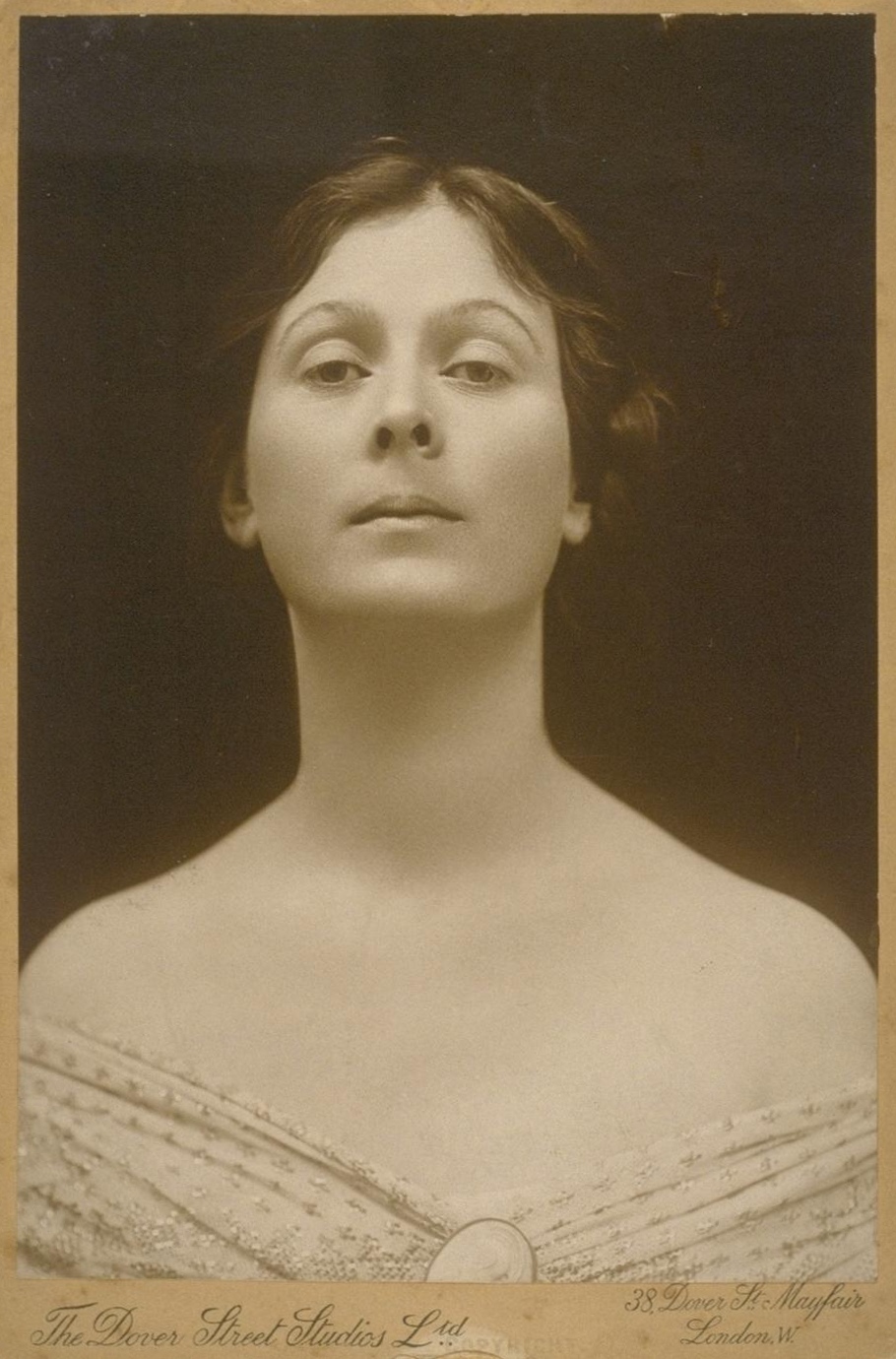
Remembering Isadora Duncan


I was a voracious reader as a child and teen. Today, I have less time for "pleasure reading," but, in fact, I'm reading nearly all day, every day. It's how I gather information, make judgments, develop confidence, find solace, and stumble upon new ideas and inspiration. 

One night this week, I awoke around 2 a.m. and couldn't get back to sleep. I decided to get up; I had something on my mind, and I thought it would be better to get up and try to distract myself than stay in bed and let it churn inside me. I stumbled in the dark to my office and looked up at my bookshelves. My eyes landed on a book I had read many, many times when I was young, My Life, by Isadora Duncan. This book affected me deeply. It gave me insights into Art and Love and Freedom and Joy and Sadness. I wanted to live the life of Isadora. 

I hadn't looked at the book in many, many years, but I took it off the shelf and sat down to browse through it. Over the years, I had written little notes in the margins, and a few of them brought back some good and not-so-good memories. Then, I found a paragraph next to which I had written, "hmmm."

I believe that in each life there is a spiritual line, an upward curve, and all that adheres to and strengthens this line is our real life—the rest is but as chaff falling from us as our souls progress. Such a spiritual line is my Art. 

Isadora believed that Art was her mission and purpose in life. It was her calling, her vocation. Art was her way to discover the inner truths of her life, the meaning of her life, and the connections between all parts of her life. Art was her air, her source of life, her spiritual path.

I felt inspired. This was indeed a good distraction. Whatever had been on my mind now seemed trivial. I remember now why reading about Isadora when I was young was so life-changing. Like Isadora, I wanted to breathe in Art and exhale Love and Joy. I still do.